Generative AI-Based Prediction System for the Risk of Disability and the Needs of Long-Term Care Services among Older Adults During the Hospitalization-Department of Health, Kaohsiung City Government,Kaohsiung Veterans General Hospital
Seamless Integration of Medical & Long-Term Care to Protect Elderly Health
As society ages, the healthcare system faces new challenges. Elderly inpatients often experience rapid physical
decline, leading to a chain reaction of disability. Utilizing new technology, Kaohsiung has introduced AI to establish
a risk prediction system, aiming to safeguard quality of life, optimize the transition to long-term care, accelerate
precise clinical decisions, and improve administrative efficiency to achieve the vision of smart care.
A New Care Model Centered on Elderly Inpatients
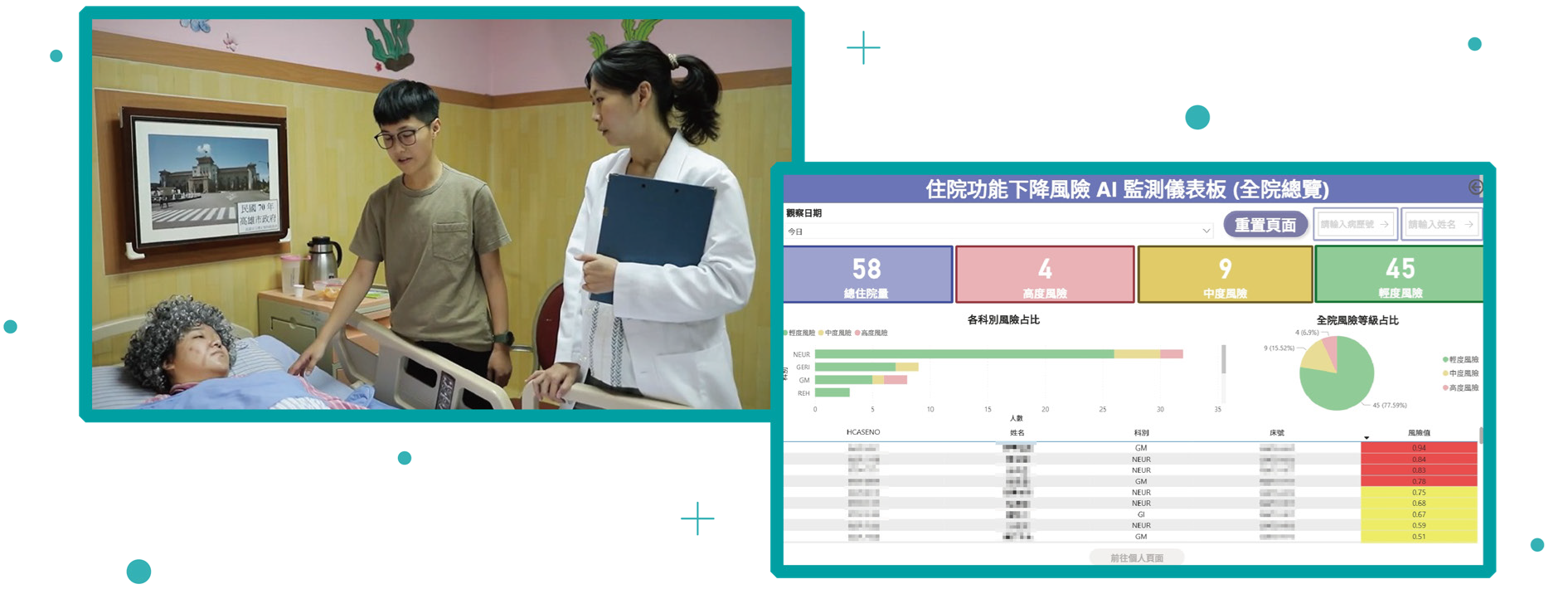
This system implements AI analysis to accurately predict the risk of functional decline during hospitalization.
It automatically provides suitable care plans and estimates disability levels and service needs for long-term
care, achieving customized support for clinical and case management decisions. By linking medical and
long-term care systems, it ensures a seamless transition of services and integrates resources effectively.
Smart Medical Dual Engines: Precise Prediction X Generative Intelligence
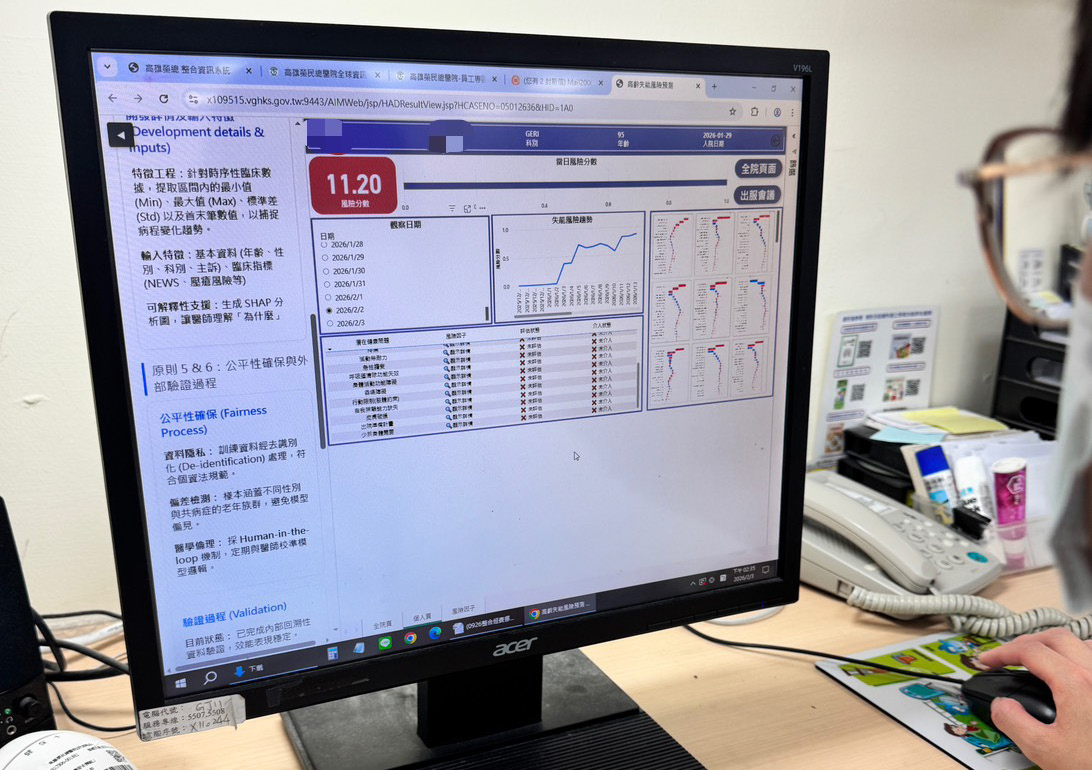
The system integrates two major AI technologies to address Hospital-Associated Disability. By analyzing big
data, it predicts Activities of Daily Living decline risk based on multimorbidity characteristics and provides
interpretable factor analysis via SHapley Additive exPlanations. Additionally, it combines Generative AI, LLM,
RAG, and a Nursing SOP knowledge base to automatically analyze medical records and generate personalized
care plans, strengthening the screening for physiological symptoms and latent risks.
Model Performance: Precise Risk Prediction
Using the CatBoost model, the system achieved 90.07% accuracy and an AUC of 0.84 in testing, significantly
outperforming traditional tools. In terms of risk factors, it identified mobility and eating ability as key protective
factors, while nasogastric and urinary catheters were identified as key risk factors.
Optimizing Clinical Assessment Efficiency
On average, the LLM identifies 11.6 health issues per case—2.03 times more than the 5.3 items identified
manually. Notably, 64.66% of these issues were latent risks not previously listed by medical staff hence the LLM
serving as a powerful clinical safety net. Furthermore, AI identification rates for skin breakdown and infection
risks reached 92%–100%, significantly enhancing risk assessment capability.