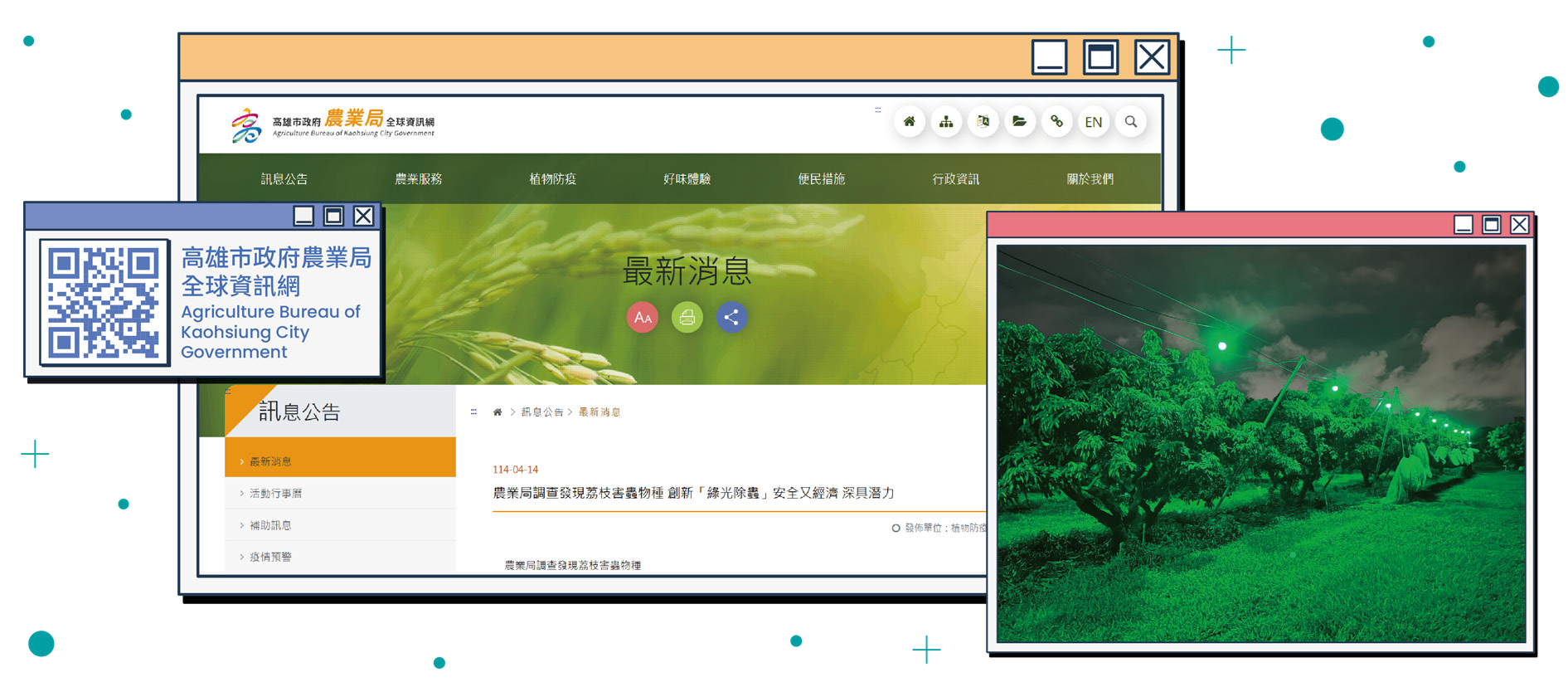
Nighttime Light Control for Litchi Fruit Borers- Agriculture Bureau Kaohsiung City Government
Green Lighting: A Scientific Tool Protecting YuHeBao Litchi
Litchi is a cornerstone of Kaohsiung’s agricultural economy, with the YuHeBao variety being its most iconic product. The Litchi Fruit Borer is the primary pest threatening yield and quality; its larvae burrow into the fruit base, causing premature drop or total loss of market value. Kaohsiung has guided farmers to use nighttime green LED lighting to suppress borer activity. This method reduces pesticide use while significantly boosting yields and farmer income.
Precision Spectrum Research
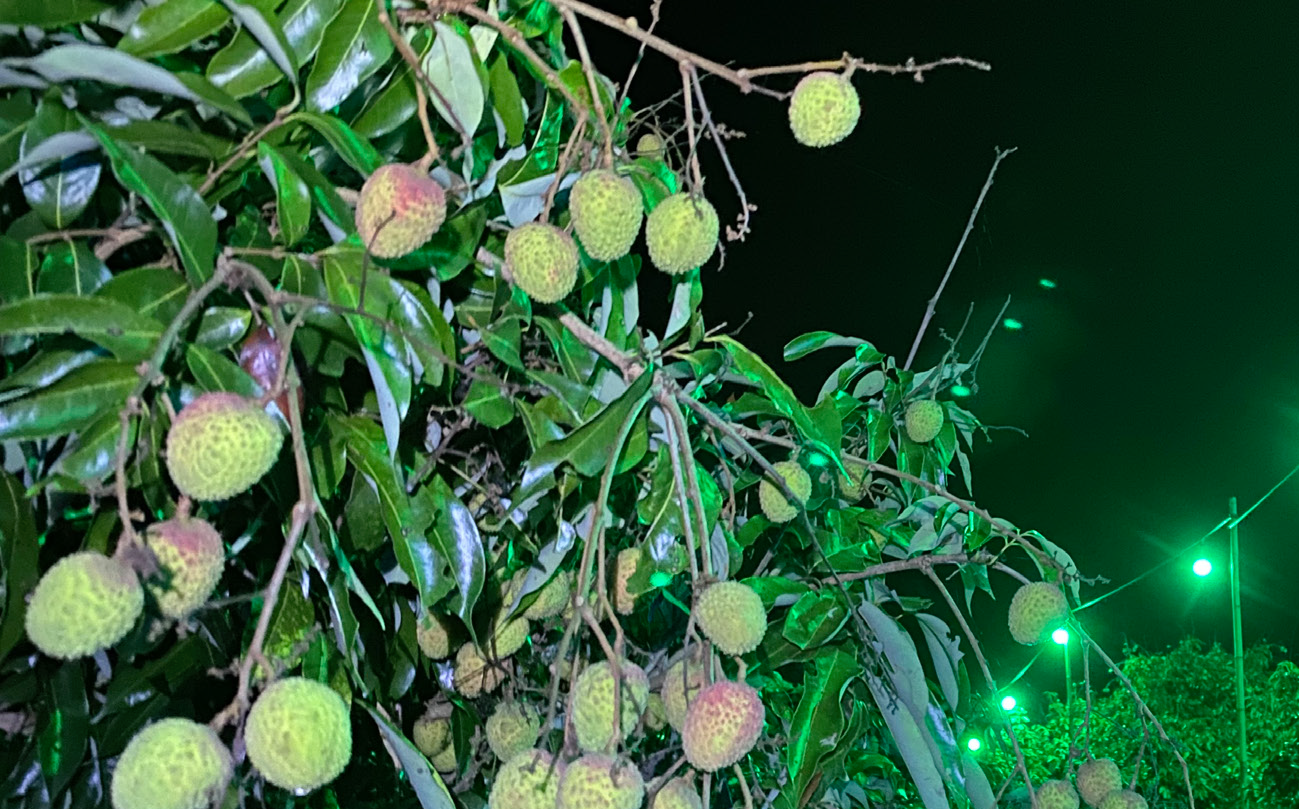
The Litchi Fruit Borer is a nocturnal insect. Artificial nighttime lighting disrupts its biological clock, causing the moth to remain inactive. Trials have proven that Green LEDs are the most effective scientific tool for suppressing borer populations. This specific spectrum precisely targets pest reproduction with minimal impact on plant growth, ensuring that the fruit’s quality and color are preserved.
Smart Pest Control & Quality Enhancement
Green light technology has slashed damage rates in conventional farming from 36% to just 2%, while keeping organic cultivation damage under 10%. It reduces pesticide application by 20–75% during the growing season without compromising fruit size or sweetness. By effectively neutralizing borer activity, the technology has greatly improved the marketability of Kaohsiung litchis.
Sustainability and Cost Reduction
The savings in pesticide and labor costs, combined with higher harvest volumes, allow farmers to recoup lighting installation and electricity costs within a single year. This approach optimizes operational expenses and fulfills the goals of Precision Agriculture, reducing chemical dependency and fostering an eco-friendly environment.
Empowering Farmers through Smart Agriculture
Since 2021, Kaohsiung has provided subsidies for smart agriculture, covering smart sensors, environmental monitoring, and automated production. To date, over 100 farms have adopted these technologies. This includes 8 specialized light-control projects covering 11.4 hectares, supported by approximately NT$2.3 million in subsidies.